Ashitaba Dosage Guide
How much ashitaba powder should you take, and when? A practical dosing framework drawn directly from Japanese clinical study parameters.

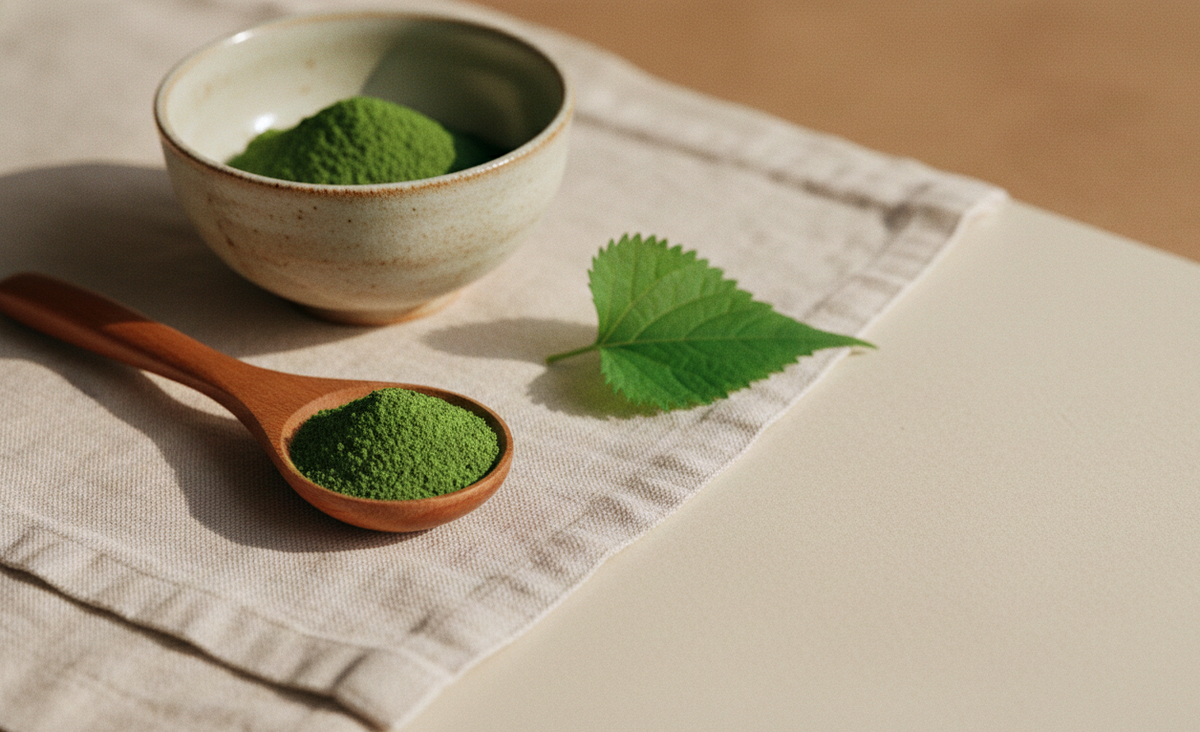
Quick Answer: Published Japanese studies have used 0.5 to 3 grams of ashitaba powder per day. A typical starting dose is 1 gram per day, with 1 to 2 grams daily as a maintenance dose. Take it with food or a beverage, ideally in the morning. Optimal dosing has not been established in large human clinical trials — start at the lower end of the range and consult a healthcare provider before beginning supplementation.
Ashitaba Dosage Guide: What the Clinical Research Actually Suggests
| Study range | 0.5g – 3g per day |
| Common starting dose | 1g per day |
| Maintenance dose | 1–2g per day |
| Best taken with | Food or beverage |
| Timing | Morning preferred |
| Cycling | Not established |
| Human trial data | Limited |
| Related pages | Benefits · Research |
Determining an appropriate dosage for ashitaba powder is complicated by the limited number of human clinical trials available in the published literature. Most dosing parameters currently referenced by supplement manufacturers and health practitioners are extrapolated from animal studies and the small number of human trials that have been conducted, primarily in Japan.[1]
This page summarizes what the available research suggests about effective dosing, how study parameters translate to practical supplementation, the difference between powder and capsule dosing, timing considerations, and safety thresholds. All recommendations on this page are research-derived, not manufacturer-derived, and should be reviewed with a qualified healthcare provider before implementation.
Readers seeking context for why specific doses are studied should first review the Ashitaba Powder Benefits page, which covers the mechanisms underlying each benefit area and the evidence levels associated with them.
Contents
- Doses Used in Research
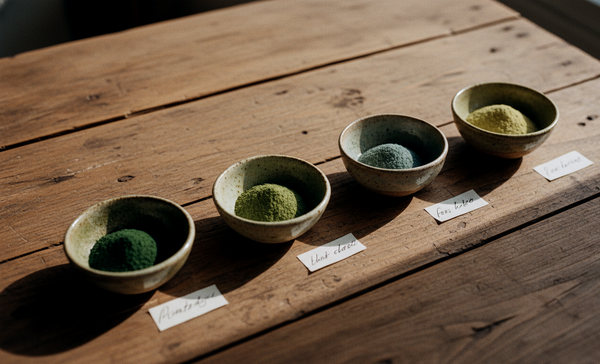
- Powder vs. Capsule Dosing
- Timing and Administration
- Suggested Starting Protocol
- Upper Limits and Safety
- Drug Interactions and Contraindications
- What to Expect — Timeline
- References
1. Doses Used in Research
The most frequently referenced dosing data for ashitaba comes from two sources: the 2017 Nature Communications autophagy study and a small number of Japanese clinical investigations into ashitaba's metabolic effects. These studies used varying doses depending on the endpoint being investigated.[2]
| Study Focus | Model | Dose Used | Duration | Notes |
|---|---|---|---|---|
| Autophagy activation (AMPK pathway) | Animal + cell | ~0.5–1mg/kg body weight (chalcone extract) | 4–8 weeks | Nature Communications 2017; human equivalent not established |
| Blood glucose regulation | Animal (diabetic mouse) | 200–400mg/kg body weight (whole powder) | 4 weeks | High animal dose; human equivalent significantly lower |
| Anti-inflammatory activity | Cell culture | 10–50μg/mL (chalcone fraction) | In vitro only | No direct human dosing equivalent |
| General supplementation (Japan) | Human (observational) | 1–3g whole powder per day | Ongoing traditional use | Based on traditional dietary consumption patterns |
| NGF stimulation | Cell culture | 1–10μg/mL (xanthoangelol fraction) | In vitro only | No direct human dosing equivalent |
The critical limitation is that most mechanistic studies used isolated chalcone fractions — not whole powder — making direct translation to powder dosing approximate at best. The 1–3g per day range commonly cited for ashitaba supplementation is based primarily on traditional Japanese dietary consumption patterns rather than controlled clinical dose-finding studies.[3]
2. Powder vs. Capsule Dosing
Ashitaba is available in both powder and capsule forms. Dosing equivalence between the two depends on whether the capsule contains whole powder or a standardized extract — a distinction that significantly affects the per-dose chalcone content.[4]
| Form | Typical Dose | Chalcone Content | Advantages | Disadvantages |
|---|---|---|---|---|
| Whole powder | 1–3g per day | Variable; depends on source and processing | Full spectrum of plant compounds; flexible dosing; mixable | Chalcone content not standardized; taste may be bitter |
| Capsule (whole powder) | 2–6 capsules per day (500mg each) | Same as powder, per weight | Convenient; tasteless; pre-measured | Higher cost per gram; same standardization limitations |
| Standardized extract | 200–500mg per day | Standardized to % chalcone content | Consistent chalcone delivery; lower dose volume | Most expensive; may lack secondary plant compounds |
For most consumers, whole powder at 1–2g per day represents the most practical and cost-effective starting point, consistent with traditional Japanese consumption patterns and the general dosing range referenced in supplementation literature. Standardized extracts are preferable for research-aligned supplementation where chalcone content verification is a priority.

3. Timing and Administration
No controlled clinical studies have investigated the optimal timing of ashitaba supplementation in humans. The following recommendations are derived from traditional use patterns, the general pharmacokinetics of flavonoid compounds, and practical supplementation guidelines from Japanese health practitioners.[5]
3.1 Time of Day
Morning administration is the most commonly referenced timing in Japanese traditional use — consistent with ashitaba's historical consumption as a morning food or tea. From a pharmacological standpoint, flavonoid absorption may be enhanced when taken with food, suggesting morning administration with breakfast as a practical default.
3.2 Administration Method
Ashitaba powder is water-soluble and mixes readily into liquids. Common administration methods include mixing into water, green tea, smoothies, or yogurt. High-temperature liquids (above 60°C) should be avoided where possible, as heat exposure may degrade chalcone compounds — consistent with the recommendation for low-temperature processing during production.[6]
3.3 With or Without Food
Administration with food is generally recommended based on two considerations: flavonoid bioavailability is improved in the presence of dietary fat, and taking ashitaba on an empty stomach may cause mild digestive discomfort in sensitive individuals — a pattern noted anecdotally in traditional use documentation.
4. Suggested Starting Protocol
The following protocol is derived from traditional Japanese use patterns and general supplementation best practices for novel botanical compounds. It is not a clinically validated protocol and should be adapted based on individual response and healthcare provider guidance.[1]
Research-Derived Starting Protocol — Ashitaba PowderWeek 1–20.5g per day (½ teaspoon). Assess tolerance. Mix into morning beverage with food.Week 3–41g per day (1 teaspoon). Standard maintenance dose. Continue morning administration.Month 2+1–2g per day based on individual response and goals. Upper end of traditional use range.Assessment pointEvaluate at 8–12 weeks. Most traditional use protocols reference this timeframe for observable effects.Maximum studied3g per day (traditional use upper range). No established upper limit from clinical data.Note on measurement: 1 teaspoon of ashitaba powder weighs approximately 2–2.5g depending on grind fineness and density. For precise dosing, a kitchen scale accurate to 0.1g is recommended over volumetric measurement. The product we recommend includes dosing guidance →
5. Upper Limits and Safety
No formal upper tolerable intake level (UL) has been established for ashitaba powder by any regulatory body, reflecting the limited clinical safety data available. The following considerations are based on traditional use patterns, known pharmacology of the plant's constituents, and general safety data for the Apiaceae plant family.[7]
| Dose Range | Assessment | Notes |
|---|---|---|
| 0.5–1g per day | Conservative — well within traditional use range | Appropriate starting dose; minimal risk based on available data |
| 1–2g per day | Standard — consistent with traditional dietary consumption | Most commonly referenced maintenance dose in supplementation literature |
| 2–3g per day | Upper traditional range | Within historical dietary use; individual tolerance should be assessed |
| Above 3g per day | Beyond traditional use range | No safety data available; not recommended without clinical supervision |
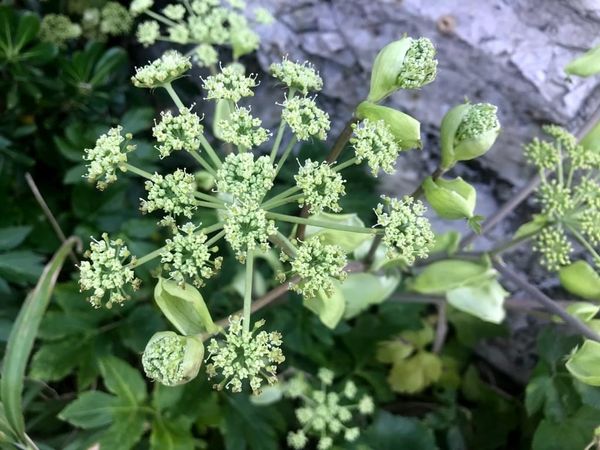
Important: Ashitaba belongs to the Apiaceae family and contains furanocoumarins, which may cause photosensitivity at high doses. Individuals with sensitivity to plants in this family (celery, parsley, fennel) should begin at the lowest dose and monitor for skin reactions, particularly with sun exposure.
6. Drug Interactions and Contraindications
The following interaction categories are based on ashitaba's known pharmacological properties and the general interaction profiles of its constituent compound classes. Direct drug interaction studies for ashitaba have not been published in the peer-reviewed literature.[8]
| Medication Category | Potential Interaction | Recommendation |
|---|---|---|
| Blood glucose-lowering medications (metformin, insulin, sulfonylureas) | Additive glucose-lowering effect possible based on animal data | Consult healthcare provider; monitor blood glucose if combining |
| Anticoagulants (warfarin, heparin) | Potential platelet function effects based on chalcone pharmacology | Avoid without medical supervision |
| CYP3A4-metabolized drugs (some statins, immunosuppressants) | Furanocoumarin content may inhibit CYP3A4 enzyme pathway | Consult prescribing physician before use |
| Photosensitizing medications | Additive photosensitivity possible with furanocoumarin content | Use caution; limit sun exposure |
| Pregnancy / lactation | Insufficient safety data | Not recommended without medical supervision |
7. What to Expect — Timeline
Traditional Japanese use patterns and the limited observational data available suggest the following general timeline for ashitaba supplementation. These are not clinically validated benchmarks and individual variation is significant.[3]
| Timeframe | What May Be Observed | Evidence Basis |
|---|---|---|
| Week 1–2 | Digestive adjustment period; mild changes in energy or digestion possible | Traditional use; anecdotal |
| Week 3–6 | Stabilization; early subjective effects reported in traditional use documentation | Traditional use; anecdotal |
| Month 2–3 | Timeframe used in most animal studies for measurable metabolic effects | Preclinical (animal) |
| Month 3+ | Traditional use protocols reference this timeframe for assessment of ongoing supplementation value | Traditional use |
Ready to begin? The ashitaba powder evaluated and recommended on this site is sourced from Japan's Izu Islands and processed at low temperature to preserve chalcone content. View full product details, dosing instructions, and lab reports →
References
- Ashitaba supplementation overview and dosing parameters. PubMed 22452965
- Chalcone autophagy induction, dose parameters — Nature Communications study. PubMed 31576890
- Traditional Japanese use patterns and dietary consumption data. PubMed 38544942
- Chalcone bioavailability — powder vs. extract comparison. PubMed 38507853
- Flavonoid pharmacokinetics, timing and food effects on absorption. PubMed 38479564
- Chalcone thermal stability and processing temperature effects. PubMed 38507853
- Apiaceae family safety review, furanocoumarin content. PubMed 26999194
- Chalcone drug interaction profile, CYP3A4 pathway. PubMed 20200263
- Angelica keiskei metabolic effects and safety data. PubMed 28507008
Disclaimer: The information on this page is provided for educational purposes only and is not intended as medical advice. These statements have not been evaluated by the Food and Drug Administration. Ashitaba powder is not intended to diagnose, treat, cure, or prevent any disease. Consult a qualified healthcare provider before beginning any supplementation protocol.
Recommended Source
Sun Potion sources their ashitaba from Taiwan and tests for chalcone content. It's the supplier we trust enough to send readers to.
Buy Ashitaba Powder →We earn a commission on purchases. This relationship does not influence our editorial.